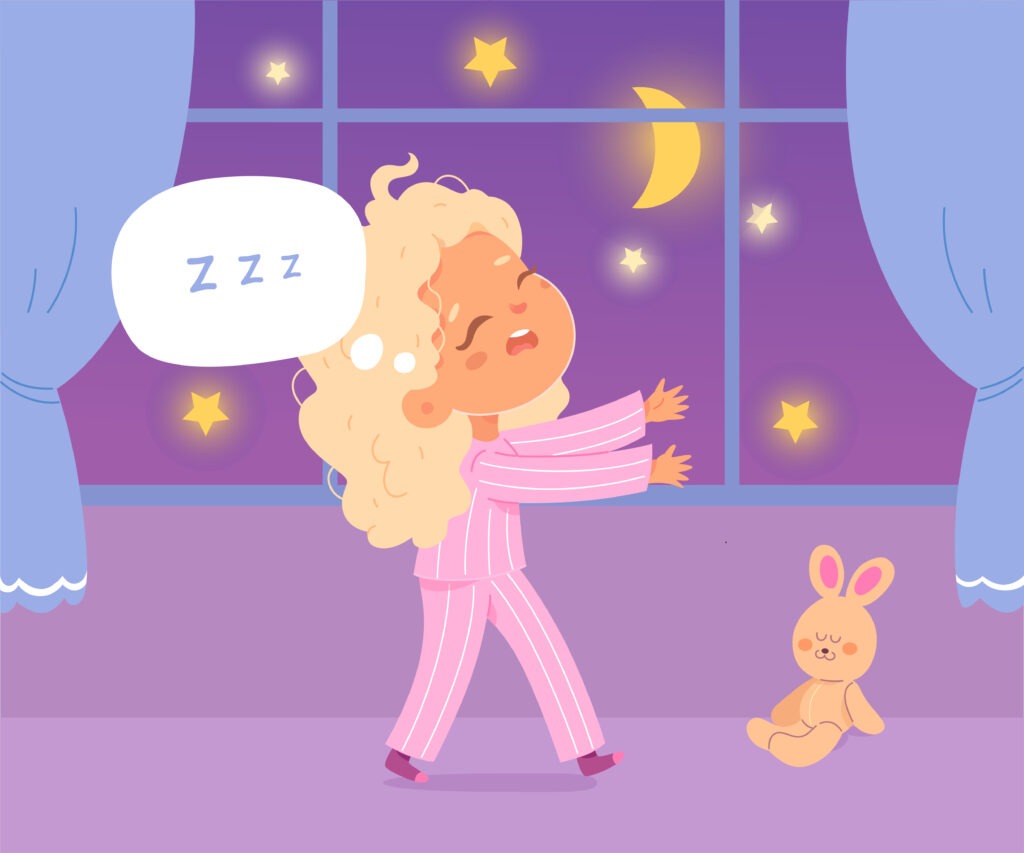
💤 What Is Sleepwalking?
Sleepwalking, also known as somnambulism, is a phenomenon where a person gets out of bed and walks around while still asleep.
Although it often looks intentional, the sleepwalker is unconscious and unaware of their actions.
Episodes can range from simple movements — like sitting up in bed — to complex behaviors such as walking through the house, opening doors, or even leaving the home.
Sleepwalking is most common in children between ages 4 and 12, but it can also affect adults, especially under stress or sleep deprivation.
While it might seem harmless or even funny at times, sleepwalking can be dangerous — leading to injuries or accidents if not managed carefully.
🧠 What Happens in the Brain During Sleepwalking?
Sleepwalking occurs during non-REM (NREM) sleep, specifically in the deepest stage (slow-wave sleep).
At this point, your body is at rest, but parts of your brain — particularly those controlling movement — can suddenly become partially awake.
This state is called “dissociated sleep”, where:
- The motor control areas (responsible for movement) activate.
- The conscious awareness centers remain asleep.
The result: your body moves, but your mind is still dreaming.
That’s why most sleepwalkers:
- Have blank or glassy expressions
- Don’t respond when spoken to
- Have no memory of the event afterward
🔍 What Causes Sleepwalking?
Sleepwalking can be triggered by a combination of genetic, environmental, and physiological factors.
Here are some of the most common causes:
🧬 1. Genetic Predisposition
Sleepwalking often runs in families.
If one parent sleepwalked, a child has about a 45% chance of experiencing it too.
If both parents did, the likelihood rises above 60%.
💤 2. Sleep Deprivation
Lack of deep, restorative sleep increases the risk of partial awakenings during slow-wave sleep — the stage where sleepwalking occurs.
😰 3. Stress or Anxiety
Emotional distress can disrupt normal sleep cycles, making episodes more frequent or intense.
🍷 4. Alcohol or Sedatives
These substances interfere with brain activity during sleep, sometimes triggering abnormal sleep behaviors.
🩺 5. Medical Conditions
Sleepwalking may be linked to:
- Fever (especially in children)
- Sleep apnea
- Restless Legs Syndrome (RLS)
- Gastroesophageal reflux (GERD)
- Certain medications (like antihistamines or antidepressants)
🧒 Why Children Sleepwalk More Often
Children experience more slow-wave sleep than adults, which explains why they are more prone to sleepwalking.
Their nervous systems are still developing, and transitions between sleep stages aren’t as smooth.
Most kids outgrow sleepwalking by their teenage years as their sleep patterns mature.
However, if episodes continue into adulthood, it could signal an underlying sleep disorder or stress-related condition.
⚠️ Is Sleepwalking Dangerous?
In many cases, sleepwalking itself isn’t harmful — but the environment can be.
Since sleepwalkers aren’t conscious, they can unknowingly:
- Trip over furniture or stairs
- Walk out of the house
- Open windows or doors
- Use sharp objects or appliances
There are also emotional risks. Recurrent sleepwalking can cause embarrassment, anxiety, or disrupted sleep for family members.
If episodes happen frequently or lead to injury, it’s important to seek evaluation from a sleep specialist.
🩺 How Sleepwalking Is Diagnosed
Doctors typically begin with a detailed sleep history, asking about patterns, duration, and triggers.
If needed, they may recommend a sleep study (polysomnography), where sensors monitor:
- Brain waves (EEG)
- Heart rate
- Breathing
- Muscle movement
This helps rule out conditions like sleep apnea, seizures, or parasomnias that mimic sleepwalking.
🧘 How to Prevent Sleepwalking Episodes
While there’s no guaranteed cure, you can significantly reduce the frequency and severity of episodes with these lifestyle adjustments:
🕰️ 1. Maintain a Consistent Sleep Schedule
Go to bed and wake up at the same time every day.
This stabilizes the sleep cycle and reduces sudden arousals during deep sleep.
🌙 2. Improve Sleep Hygiene
Avoid caffeine, alcohol, and large meals before bed.
Create a calm environment — dark, cool, and quiet — to promote deep, stable rest.
🧠 3. Manage Stress and Anxiety
Stress is a powerful trigger.
Practice relaxation routines before bedtime:
- Deep breathing
- Meditation or prayer
- Gentle stretching
- Listening to soft music
🚫 4. Avoid Sleep Deprivation
Sleep loss can make episodes more frequent.
Adults should aim for 7–9 hours of sleep per night; children, 9–11 hours.
💊 5. Review Medications
If sleepwalking began after starting new medication, consult your doctor.
Sometimes dosage adjustments or alternatives can eliminate episodes.
🏠 Safety Tips for Sleepwalkers
Because sleepwalking can be unpredictable, safety should be the top priority.
Here’s how to make your home safer for a sleepwalker:
🚪 1. Secure the Environment
- Lock doors and windows.
- Use baby gates at stairs.
- Keep sharp or heavy objects out of reach.
- Remove clutter or loose rugs that could cause tripping.
🔔 2. Use Motion Detectors or Alarms
Low-level alarms on bedroom doors can gently wake the sleepwalker or alert family members when movement occurs.
💡 3. Keep Lighting Soft
A dim nightlight can reduce confusion and make it easier for the person to orient themselves if they wake up mid-episode.
🪟 4. Avoid Bunk Beds for Children
If a child is prone to sleepwalking, always have them sleep on the bottom bunk or a floor-level bed to prevent falls.
🧍 5. Don’t Try to Wake Them Forcefully
Waking a sleepwalker can cause panic or aggression.
Instead, gently guide them back to bed using a calm voice and light touch.
📱 Technology and Sleep Tracking
Modern sleep trackers and smart home devices can help monitor and prevent sleepwalking episodes.
- Smart rings or watches detect movement and heart rate changes during the night.
- Bed sensors can send alerts when the person leaves the bed.
- AI sleep apps analyze nightly data to identify patterns and potential triggers.
By combining technology with lifestyle habits, families can make sleepwalking management both safer and easier.
🌅 When to See a Doctor
You should consult a healthcare provider if:
- Episodes happen multiple times per week
- The person engages in dangerous activities
- There’s daytime fatigue, memory loss, or mood changes
- The sleepwalker has violent or sexual behaviors during sleep
Sleep specialists may recommend cognitive behavioral therapy (CBT), stress management, or in rare cases, prescription medication to regulate deep sleep transitions.
🌌 Final Thoughts: Turning Fear Into Awareness
Sleepwalking can be unsettling — but understanding its causes takes away much of the fear.
It’s not possession, madness, or lack of control; it’s a temporary sleep-stage imbalance that can be managed with consistency, safety, and care.
With a stable routine, stress management, and smart use of modern technology, you can protect sleepwalkers and ensure that everyone in the household enjoys safe, peaceful nights.



 English
  Indonesian
  Chinese