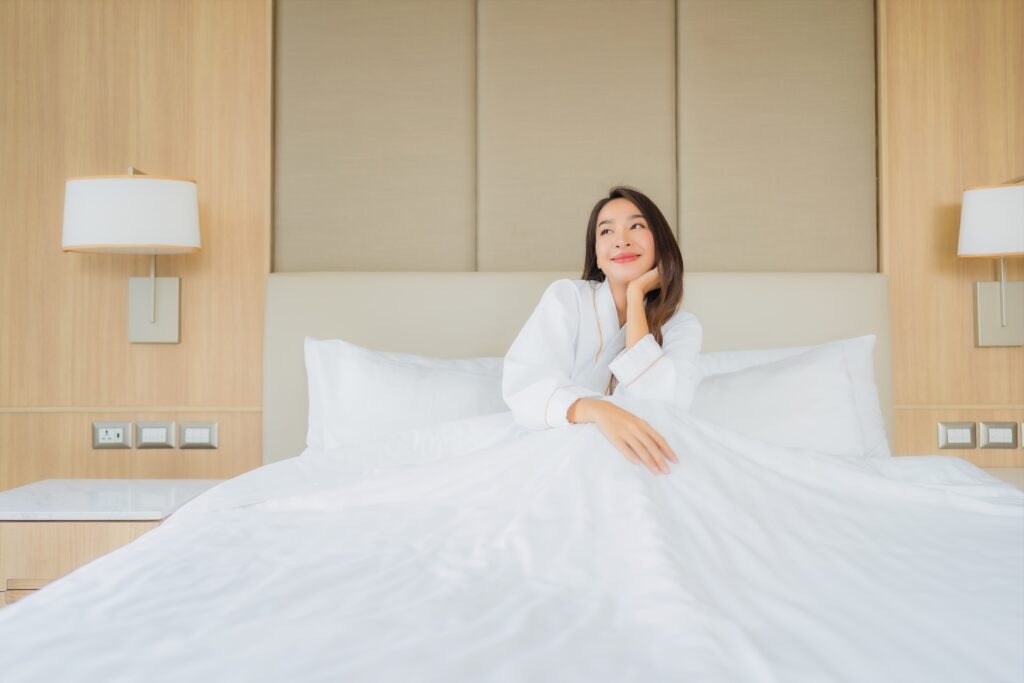
Have you ever walked into a room and instantly felt calmer just because of the way it smelled? Scents are powerful. They can trigger memories, influence mood, and even prepare your body for rest. When it comes to sleep, room scents play an important role in creating a comfortable and relaxing environment.
In this article, we’ll explore how different scents affect your sleep comfort, the science behind aromatherapy, which fragrances to choose for a restful night, and tips on how to use them safely in your bedroom.
The Science of Scents and Sleep
Our sense of smell is directly linked to the limbic system in the brain, which controls emotions, memories, and relaxation responses. This means certain scents can:
* Reduce stress and anxiety by lowering cortisol levels.
* Trigger relaxation by promoting alpha brain waves, which prepare the mind for sleep.
* Regulate mood by increasing serotonin and dopamine, “feel-good” chemicals.
* Improve sleep quality by helping you fall asleep faster and reducing nighttime disturbances.
Research shows that aromatherapy—the use of essential oils and scents for therapeutic purposes—can improve both the quality and duration of sleep.
Best Scents for Better Sleep Comfort
Not all scents have the same effect. Here are some of the most effective fragrances for sleep:
1. Lavender 🌿
* The most popular sleep scent.
* Reduces heart rate and blood pressure.
* Helps with insomnia and anxiety.
2. Chamomile 🌼
* Known for its calming properties.
* Often used in teas but equally effective in room sprays or essential oils.
* Helps with stress-induced restlessness.
3. Sandalwood 🌲
* A warm, earthy fragrance that promotes deep relaxation.
* Can help lower wakefulness during the night.
4. Jasmine 🌸
* Sweet floral scent that reduces anxiety.
* Some studies show it improves sleep efficiency as much as certain sedatives.
5. Rose 🌹
* Creates a soothing atmosphere and may reduce mild depression.
* Excellent for emotional balance before bed.
6. Vanilla 🍦
* Sweet and comforting.
* Has mild sedative effects that reduce restlessness.
7. Peppermint 🌱 (used carefully)
* Can clear airways for those with mild congestion.
* Provides a cooling effect but should be used lightly as it can be stimulating for some.
Ways to Use Room Scents in Your Sleep Routine
There are several safe and effective ways to incorporate scents into your sleep environment:
* Essential Oil Diffuser: Add a few drops of your chosen essential oil to water. It disperses fragrance evenly throughout the night.
* Pillow or Linen Spray: Lightly mist your pillow or sheets before bedtime. Choose alcohol-free sprays for sensitive skin.
* Aromatherapy Candles: Provide both fragrance and ambiance. Blow them out before sleep to avoid fire hazards.
* Reed Diffusers: A low-maintenance option that slowly releases scent into the room.
* Scented Sachets or Herbal Bags: Place under your pillow or in bedding drawers for a subtle effect.
Things to Consider for Safe Use
While room scents can greatly enhance sleep comfort, a few precautions are worth keeping in mind:
* Avoid overpowering fragrances: Too much scent can be stimulating rather than calming.
* Check for allergies: Some people may react to strong essential oils. Start small.
* Choose pure oils: Synthetic fragrances often contain chemicals that may irritate.
* Keep ventilation in mind: Ensure the room isn’t stuffy—scents should be gentle and breathable.
Matching Scents to Your Sleep Goals
* Struggling with stress and racing thoughts? → Try lavender, chamomile, or rose.
* Need to improve deep sleep? → Go for sandalwood or vanilla.
* Want a calming, romantic atmosphere? → Jasmine or rose are perfect.
* Trouble with nasal congestion at night? → Use peppermint or eucalyptus lightly.
Conclusion
Room scents aren’t just about making your bedroom smell nice—they’re tools for creating a sanctuary that promotes rest and comfort. With the right fragrance, you can calm your mind, ease stress, and drift into deeper sleep.
Whether you choose lavender for relaxation, sandalwood for grounding, or jasmine for sweet dreams, the key is finding a scent that feels natural and soothing to you. Start simple, be consistent, and let aromatherapy transform your nights into a more restorative experience.