🌙 The Growing Demand for Natural Sleep Remedies
In today’s fast-paced world, quality sleep has become a luxury.
Between stress, late-night screen time, and caffeine overload, many people struggle to fall or stay asleep.
Instead of turning to synthetic sleeping pills, more individuals are embracing natural herbal blends that promote deep, restorative rest — without the risk of dependence or grogginess.
Herbal sleep remedies have been used for centuries across cultures, from ancient Chinese and Ayurvedic traditions to modern herbalism.
When blended correctly, certain herbs create synergistic effects that calm the nervous system, ease anxiety, and help the body transition naturally into sleep.
Let’s explore the best herbal combinations for deep, uninterrupted rest — and the science behind why they work.
🌼 Why Herbal Blends Work Better Than Single Herbs
While a single herb like chamomile or valerian can promote relaxation, herbalists often recommend combining multiple herbs to balance and enhance their effects.
This approach, known as synergy, allows the active compounds from each herb to complement one another.
For example:
- Valerian root calms the nervous system and reduces sleep latency (time it takes to fall asleep).
- Passionflower reduces anxiety and racing thoughts.
- Lemon balm balances mood and relaxes the body.
Together, these herbs create a comprehensive calming effect, leading to deeper and more restorative sleep than any one herb alone.
💤 The Best Herbal Blends for Deep Sleep
Below are the most effective combinations of herbs known for promoting relaxation, reducing insomnia, and supporting deep sleep cycles.
🌿 1. Valerian Root + Lemon Balm
Best For: People who struggle to fall asleep due to anxiety or an overactive mind.
- Valerian root works as a mild sedative by increasing GABA levels in the brain — a neurotransmitter that calms nervous activity.
- Lemon balm (Melissa officinalis) enhances this effect by preventing GABA breakdown and soothing stress-related restlessness.
Science says:
A 2014 study in Phytotherapy Research found that a combination of valerian and lemon balm significantly improved sleep quality and mood compared to a placebo group.
How to use:
Brew 1 teaspoon each of valerian root and lemon balm in hot water for 10–15 minutes before bed.
🌼 2. Chamomile + Lavender + Passionflower
Best For: Those who need gentle relaxation and emotional balance before sleep.
- Chamomile contains apigenin, a compound that binds to sleep-related receptors in the brain.
- Lavender soothes the senses, reduces heart rate, and enhances overall calmness.
- Passionflower quiets racing thoughts and nervous tension.
Why it works:
This trio acts as a natural nervous system stabilizer, reducing anxiety-induced insomnia and improving sleep depth.
Try this:
Steep 1 tablespoon of chamomile, ½ teaspoon of dried lavender flowers, and ½ teaspoon of passionflower in hot water for 10 minutes.
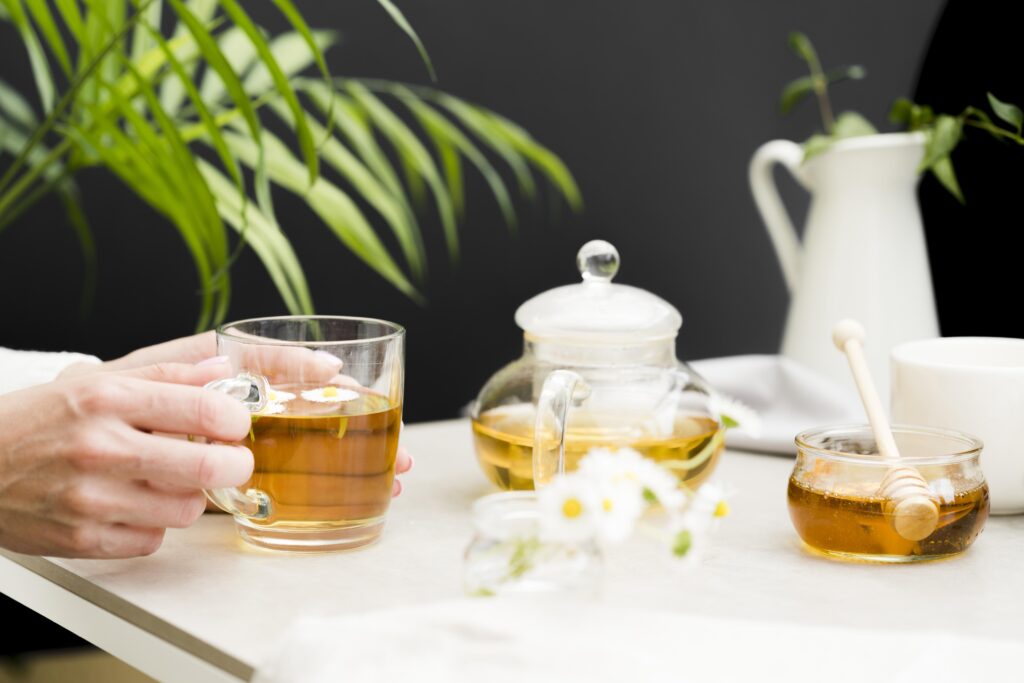
Add honey for a gentle sweetness and enjoy 30 minutes before bed.
🌺 3. Ashwagandha + Holy Basil + Licorice Root
Best For: People whose sleeplessness is caused by chronic stress or adrenal fatigue.
- Ashwagandha is an adaptogen that helps balance cortisol levels and promotes relaxation.
- Holy basil (tulsi) reduces stress and mental overactivity.
- Licorice root supports adrenal health and stabilizes mood.
This blend doesn’t sedate — it regulates the body’s stress response, helping you unwind naturally and sleep deeply.
Bonus:
These herbs are also beneficial during the day for managing anxiety and mental fatigue.
🍃 4. Hops + Valerian + Skullcap
Best For: Restless sleepers who wake up frequently during the night.
- Hops, famously used in beer brewing, has potent sedative effects when used as a tea or tincture.
- Valerian enhances GABA activity for deeper sleep.
- Skullcap helps calm the mind and relieve nervous irritability.
Scientific support:
Research in the Journal of Psychopharmacology showed that this combination helps reduce nighttime awakenings and improves sleep efficiency.
🌸 5. Reishi Mushroom + Jujube + Licorice
Best For: Those interested in Traditional Chinese Medicine (TCM) approaches to sleep.
- Reishi mushroom (Ganoderma lucidum) is known as the “mushroom of immortality” — it calms the spirit and reduces stress.
- Jujube seed nourishes the heart and promotes tranquility.
- Licorice root harmonizes the blend and supports adrenal recovery.
This TCM-inspired trio helps quiet mental chatter and supports yin energy, promoting restful sleep without sedation.
🌿 When and How to Take Herbal Blends
For best results, consistency is key.
Most herbal sleep blends work gently and gradually — their effects often build over several nights.
Here are the most effective ways to consume them:
| Form | How to Use | Ideal Timing |
|---|---|---|
| Herbal Tea | Steep herbs in hot water for 10–15 minutes | 30–60 minutes before bed |
| Tincture (liquid extract) | Add 20–40 drops to warm water | 20 minutes before bed |
| Capsules | Follow label dosage | 1 hour before bedtime |
| Aromatherapy | Diffuse lavender or vetiver essential oil | As part of a bedtime ritual |
💡 Tip: Combine your herbal routine with calming activities like journaling, reading, or light stretching to deepen relaxation.
⚖️ Safety Tips and Precautions
While herbal blends are natural, they’re still powerful — and should be used mindfully.
- Start with small doses and increase gradually.
- Avoid combining multiple strong sedative herbs (like valerian and hops) if you’re new to herbal sleep aids.
- Consult your doctor before use if you’re pregnant, breastfeeding, or taking prescription medications (especially antidepressants or sleep aids).
- Avoid alcohol before or after taking herbal sleep teas or tinctures, as it can increase drowsiness.
🧘 Lifestyle Habits to Support Deep Rest
Herbs work best when paired with healthy sleep habits.
To maximize their benefits:
- Keep a consistent bedtime routine.
- Turn off screens 1 hour before bed.
- Limit caffeine after 2 p.m.
- Keep your room cool, dark, and quiet.
- Practice mindfulness or breathing exercises before sleep.
Together with herbal support, these habits can transform your nights from restless to restorative.
🌙 Final Thoughts: Nature’s Answer to Sleepless Nights
Herbal blends offer a gentle, holistic solution for anyone seeking deeper, more restorative rest.
Unlike pharmaceutical options, they work with your body — not against it — helping balance stress hormones, calm the nervous system, and promote natural sleep cycles.
🌿 In essence: A warm cup of herbal tea or a few drops of tincture before bed can be more than a ritual — it’s a powerful act of self-care that reconnects you with nature’s rhythm.
So tonight, let the ancient wisdom of herbs guide you into calm, deep, and peaceful sleep.